Weight loss
What Is a Calorie Deficit? A Simple Guide to Losing Weight
Every weight-loss method — keto, fasting, low-carb, “clean eating” — works for one reason: it puts you in a calorie deficit. Understand the deficit and you stop chasing diets and start choosing the approach you can actually live with.
What a calorie deficit actually is
A calorie deficit means you eat fewer calories than your body burns. When that happens, your body makes up the difference by using stored energy — mostly body fat — and you lose weight. Eat more than you burn (a surplus) and you gain; match it and weight holds steady.
Find your number in two steps
- Estimate your maintenance calories — the amount that keeps your weight stable. A rough starting point is body weight in pounds × 14–16 (more if you’re active). Online TDEE calculators do the same with a few more inputs.
- Subtract 10–20%. For most people that’s a deficit of about 300–500 calories a day, which targets roughly 0.5–1 lb (0.25–0.5 kg) of fat loss per week.
These are estimates, not laws. The real test is the scale over 2–3 weeks — adjust from there.
Don’t cut too hard
A bigger deficit isn’t better. Very low intakes are tough to sustain, cost you muscle, tank your energy, and usually end in a rebound. A moderate deficit you can hold for months beats an aggressive one you quit in a week.
Make the deficit easier to hold
- Prioritise protein. It’s the most filling macro and protects muscle while you lose fat.
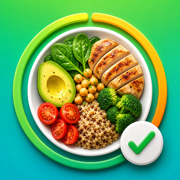
- Build meals around volume. Vegetables, fruit, and lean protein fill you up for few calories.
- Watch liquid calories. Soda, juice, and alcohol add up fast without filling you up.
- Track honestly for a while. Most people underestimate intake by hundreds of calories — logging makes the deficit real.
When the scale stalls
Weight drops in steps, not a straight line — water, salt, and hormones cause day-to-day noise. Judge progress by the weekly average. If it’s genuinely flat for 2–3 weeks, trim another ~100–150 calories or add a little more movement.
A calorie deficit is the engine of fat loss; the “diet” is just the packaging. Pick foods you enjoy, keep the deficit moderate, and let consistency do the work.
Nourra estimates calories from a photo and tracks your daily deficit.
Launching July 1, 2026 →