Nutrition basics
How to Build a Balanced Plate
Counting every gram works for a while, but it's not how most people eat for the rest of their lives. The plate method gives you a visual shortcut to a balanced meal — no app, no scale, no math — that gets you most of the way to good nutrition just by looking at what's in front of you.
The basic split
Picture a standard dinner plate divided into sections:
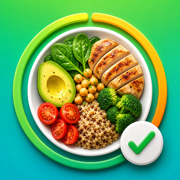
- Half the plate — vegetables and fruit. Mostly non-starchy vegetables: leafy greens, broccoli, peppers, tomatoes, cucumber, carrots. They're low in calories, high in fiber, and take up real space in your stomach.
- A quarter — protein. Chicken, fish, eggs, tofu, beans, lentils, Greek yogurt, cottage cheese. Protein is the macro most people under-eat, and it does the most work for satiety.
- A quarter — carbohydrates. Rice, potatoes, pasta, bread, oats, quinoa. Ideally with the fiber intact — whole grains and whole potatoes rather than heavily refined versions.
- A thumb-sized amount of fat, whether that's the oil something was cooked in, a drizzle on the vegetables, avocado, nuts, or cheese.
Why this ratio works
It isn't arbitrary. Vegetables taking up half the plate means you're getting fiber, water, and micronutrients in a low-calorie-dense form before you get to the more calorie-dense parts of the meal. A quarter protein keeps you full for hours instead of one. A quarter carbs gives you energy without dominating the meal the way a giant bowl of pasta would. The fat is small because it's calorie-dense — a little goes a long way, both nutritionally and in flavor.
The net effect is a meal that's automatically higher in volume and fiber, and lower in calorie density, than most default meals — without ever mentioning a calorie number.
Adapting it to your goals
The 50/25/25 split is a solid default, but it's a starting point, not a rule:
- Trying to lose weight? Lean the vegetable half slightly bigger and keep the carb quarter more modest — it lowers the calorie density of the whole plate without you feeling like you're eating less.
- Strength training or very active? Push protein up toward a third of the plate and don't be shy with the carb portion — you'll recover and perform better.
- Vegetarian or vegan? Protein sources like lentils, chickpeas, tofu, and tempeh often carry carbs with them — that's fine, just eyeball the total volume rather than trying to keep the sections perfectly separate.
Where it breaks down (and how to handle it)
- Mixed dishes. Stir-fries, curries, and casseroles don't separate into neat sections. Estimate the proportions of protein, carbs, and vegetables in the dish as a whole instead.
- Restaurant plates. Portions are often bigger and carb- or fat-heavy. Use the same mental split to decide what to eat first and how much of the carb portion to actually finish.
- Snacks and single-food meals. The plate method is built for full meals. For a snack, just think in terms of pairing a carb with some protein or fat to keep it satisfying.
A quick way to check yourself
Before you eat, glance at your plate and ask: is half of this vegetables? Is there a clear protein source, not just a garnish of it? If the answer to either is no, it's an easy fix — add a handful of greens, or move some of the protein from a side thought to the center of the plate.
The plate method won't hit an exact calorie or macro target, but it doesn't need to. It nudges every meal in the right direction, and that consistency compounds a lot better than perfect tracking for two weeks followed by burnout.
Nourra estimates calories and macros from a photo of your plate.
Launching July 1, 2026 →